Dreaming about more space near Piedmont? Acreage living can offer room to spread out, add utility, and enjoy a different pace than a typical subdivision lot. But before you fall in love with a few extra acres, it helps to understand that not every property near Piedmont works the same way. Jurisdiction, utilities, financing, and day-to-day upkeep can all change what ownership really looks like. Let’s dive in.
Why jurisdiction matters first
One of the biggest questions with acreage near Piedmont is not just how large the parcel is, but where the property is legally located. A home inside Piedmont city limits may fall under the city’s zoning and permitting rules, while a property in unincorporated Canadian County can fall under a very different framework.
According to the Canadian County Permit Office, unincorporated county property currently has no codes restricting use or development, except in Special Flood Hazard Areas and county-maintained rights-of-way. If the parcel is inside a municipality, though, the county directs you back to the city for zoning and permit requirements.
That means two homes with similar acreage near 73078 can come with very different expectations. Before you make an offer, you will want to confirm whether the property is inside Piedmont city limits or in unincorporated Canadian County.
Piedmont acreage zoning basics
If the property is inside Piedmont city limits, zoning becomes a key part of your due diligence. The Piedmont zoning code includes several districts that can affect how an acreage property functions.
Here are a few examples buyers should know:
- RE Rural Estates commonly includes tracts from 2.5 to 4.99 acres
- RE-1 Medium Size Rural Estates commonly includes tracts from 1 to 2.49 acres
- RE-2 Minimum-Size Rural Estates commonly includes tracts from 0.5 to 0.99 acres
- A-1 Agricultural may apply to other land uses under the city code
The same code notes that RE districts are intended as a transition zone and may include single-family homes on small tracts, farm animals on acreages, and limited agricultural endeavors. It also explains that RE-1 is designed for either public water or a private well with a subsurface sewage absorption field, while RE-2 is designed for public water with a subsurface sewage absorption field.
For you as a buyer, this matters because lot size alone does not tell the whole story. A 1-acre parcel and a 4-acre parcel may have very different utility setups, zoning limitations, and long-term flexibility depending on the district.
Utilities can shape the lifestyle
Acreage properties often come with utility systems that need more attention than what you might expect in a standard neighborhood. Water and wastewater are two of the most important items to verify early.
Septic and on-site systems
Many rural Oklahoma homes rely on on-site wastewater systems instead of city sewer. The Oklahoma DEQ says system design depends on a soil test, the size of the property, and the number of bedrooms.
That is important because not every parcel supports the same type of system. DEQ also states that homeowners are responsible for maintenance, and periodic septic tank pumping is essential to long-term operation.
When you are evaluating a property, ask:
- What type of wastewater system is in place?
- Was the soil evaluated for the current system?
- When was the system last serviced or pumped?
- Are there records for installation or maintenance?
Private wells and water quality
If the home uses a private well, there is another layer of due diligence. OSU Extension notes that private well users are responsible for monitoring water quality.
The same guidance explains that many lenders require a water test before approving a loan. It also says DEQ recommends annual coliform testing and inorganic chemical testing every three to five years.
OSU further notes that well-water problems are more likely near septic drainfields, barnyards, animal feeding operations, flood events, or poor well construction. In practical terms, you should not treat a private well as a simple checkbox. You should treat it like a major system that deserves real review.
Outbuildings need a closer look
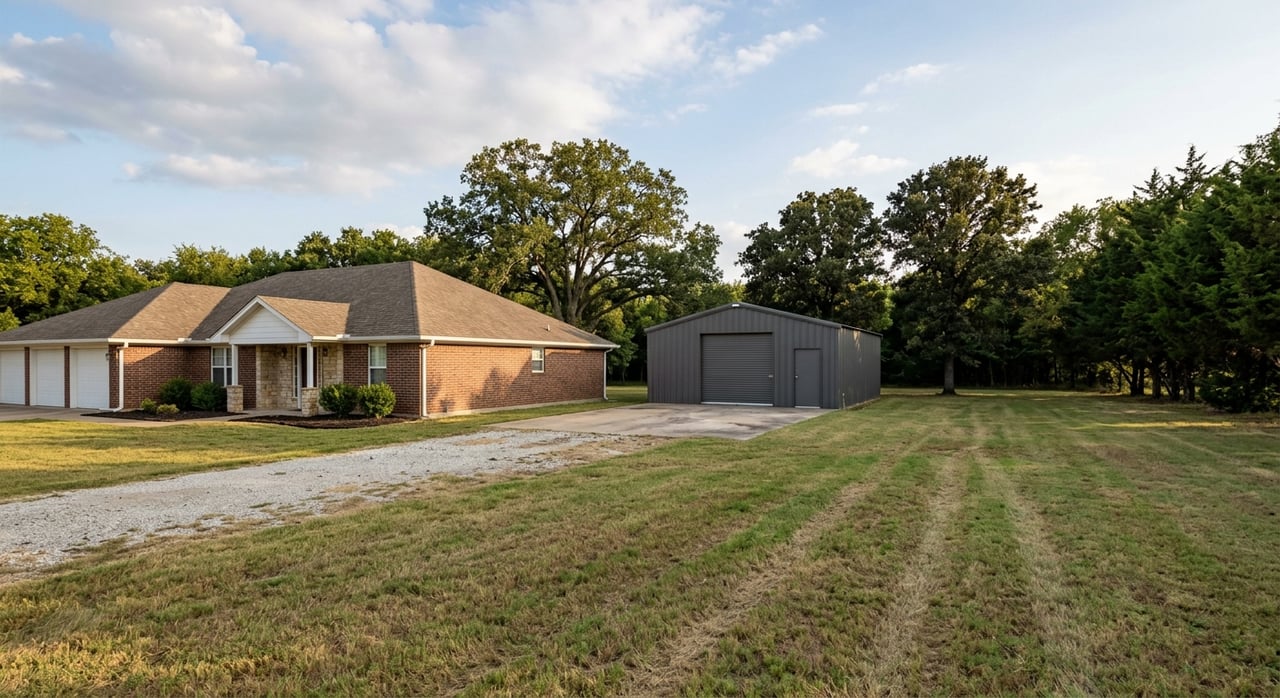
One reason buyers are drawn to acreage near Piedmont is the potential for added utility. Shops, barns, detached garages, and storage buildings are often part of the appeal. They can support hobbies, equipment storage, parking, or flexible use that is hard to find on a smaller lot.
But common does not mean automatic. The Piedmont zoning code defines an accessory building as a subordinate building on the same lot as the main building, and it says construction or alteration of any building, including accessory buildings, requires a building permit in city limits.
Financing can also come into play. Fannie Mae notes that outbuildings may affect whether a property is viewed as residential or agricultural, and unusual floor plans may have limited market appeal.
That does not mean outbuildings are a problem. It means you should verify:
- Whether existing outbuildings were properly permitted, if applicable
- How the appraiser and lender may view the structures
- Whether the overall property still fits standard residential financing guidelines
Maintenance is usually more hands-on
More land can be a great fit, but it often comes with more responsibility. That is one of the biggest adjustments for buyers moving from a subdivision lot to acreage.
OSU Extension points out that rural-urban interface properties can create conflict around noise, dust, odor, traffic, and scenic expectations. It also warns absentee owners to watch for overgrazing, weeds, erosion, and trespass.
Even if you are not planning agricultural use, the takeaway is simple: acreage usually requires more site awareness and more upkeep. You may have more mowing, more fence or boundary attention, and more ongoing management than you would in a typical neighborhood setting.
Floodplain and permit checks matter
Not every acreage issue is visible during a showing. Some of the most important details come from permit and floodplain review.
The Canadian County Permit Office says a permit is required for development within a FEMA-identified Special Flood Hazard Area and for work in county-maintained rights-of-way. Outside those areas, the county says unincorporated property currently has no codes restricting use or development.
This is one reason a quick online search is not enough. If you are considering adding improvements, changing access, or simply wanting fewer surprises after closing, floodplain status and right-of-way questions should be part of your early research.
Financing for acreage homes
Financing an acreage property can be straightforward, but it depends on how the home and land are being used. Buyers sometimes assume acreage automatically rules out certain loan options, but that is not always the case.
The USDA Rural Development Section 502 Guaranteed Loan program may offer 100% financing for eligible rural buyers who will occupy the home as a primary residence. USDA says the program can be used to buy, build, rehab, improve, or relocate a dwelling in an eligible rural area. It also states there are no set acreage limits, but the property cannot be income-producing.
That is an important distinction for acreage shoppers near Piedmont. A larger parcel does not automatically disqualify a property, but the full use and classification of the property still matter. Address eligibility and lender review are both essential.
Questions to ask before you buy
If you want to buy acreage near Piedmont with confidence, focus on the details that shape daily life and long-term flexibility.
Use this checklist as a starting point:
- Is the property inside Piedmont city limits or in unincorporated Canadian County?
- What zoning applies, if the parcel is in city limits?
- Is water public or private, and if private, when was the well last tested?
- What type of septic or on-site wastewater system serves the home?
- Are there existing outbuildings, and were they properly handled under applicable rules?
- Could the lender or appraiser view the property as agricultural rather than residential?
- Is any part of the parcel located in a Special Flood Hazard Area?
- Will your intended use match the property’s current setup and financing path?
The bottom line on acreage near Piedmont
Acreage living near Piedmont can be a great fit if you want more room, more flexibility, and a property that functions differently from a standard subdivision home. The key is understanding that acreage value is not just about size. It is about jurisdiction, zoning, utilities, outbuildings, maintenance, and how the home will be financed and appraised.
If you want help sorting through those details before you buy, Adam Hubregtse brings a steady, detail-oriented approach to helping you evaluate what a property really offers and what questions to ask before you move forward.
FAQs
What should buyers verify first about acreage near Piedmont?
- Confirm whether the property is inside Piedmont city limits or in unincorporated Canadian County, because zoning, permits, and development rules can change based on jurisdiction.
What utility questions matter most for acreage homes in 73078?
- Ask whether the home uses public water or a private well, whether wastewater is handled by an on-site system, and whether recent testing or maintenance records are available.
What should buyers know about septic systems on acreage properties near Piedmont?
- DEQ says on-site wastewater system design depends on soil testing, property size, and bedroom count, and homeowners are responsible for ongoing maintenance.
What should buyers ask about private wells on acreage near Piedmont?
- Ask when the well was last tested, because OSU Extension says private well owners are responsible for monitoring water quality and some lenders may require water testing.
What should buyers know about outbuildings on acreage properties?
- Shops, barns, and detached garages can affect permits, appraisals, and financing, so you should verify how they were built and how the lender may classify the property.
Can buyers use USDA financing for acreage near Piedmont?
- USDA says its Section 502 Guaranteed Loan program may allow 100% financing for eligible primary-residence buyers in qualifying rural areas, but the property cannot be income-producing and address eligibility must be verified.